
How Long Should a Preschool Dance Class Be?
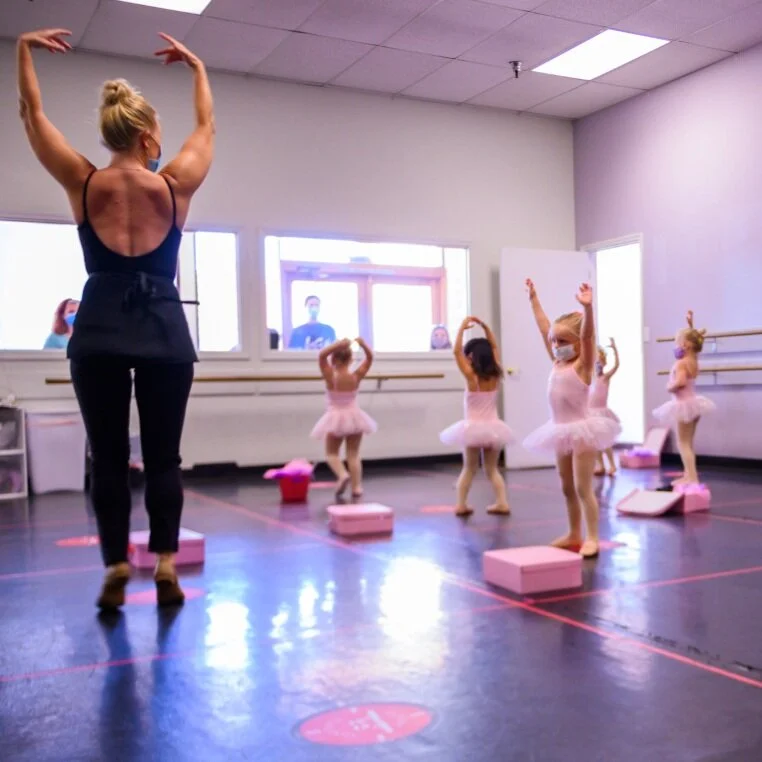
For studio owners and teachers, deciding on the right preschool dance class length is one of the most important choices you can make. Class time affects everything from attention span and skill retention to behavior, parent satisfaction, and long-term student success. If a class is too short, dancers may not have enough time to warm up, explore movement concepts, and feel accomplished. If it is too long, young children can lose focus, become restless, and stop absorbing what you are teaching. Finding the right balance is what helps preschool dance classes feel joyful, productive, and developmentally appropriate.
Teaching preschool dancers is very different from teaching elementary, teen, or adult students. Young children are still learning how to follow directions, take turns, transition between activities, and regulate their energy. Their dance education is not only about technique. It is also about building coordination, musicality, confidence, classroom habits, and a love for movement. That is why the ideal class length should match both their age and their stage of development.
What Is the Ideal Preschool Dance Class Length?
The ideal preschool dance class length is usually 30 to 45 minutes, depending on the age of the dancers, the class format, and the learning goals. For most studios, this range gives teachers enough time to include a warm-up, across-the-floor movement, creative activities, basic skill development, and a closing routine without overwhelming young students.
A strong preschool class does not need to feel packed with content. In fact, preschool dancers learn best through repetition, simple structure, and short activity changes. A shorter class can still be highly effective when the lesson plan is well-organized and age-appropriate.
In general:
- Ages 2 to 3 often do best in classes around 30 minutes
- Ages 3 to 4 usually thrive in 30 to 40-minute classes
- Ages 4 to 5 can often handle 40 to 45 minutes
- Kindergarten-aged dancers may succeed in 45 minutes, especially if they have prior class experience
The key is not choosing the longest class possible. The goal is choosing the class length that allows children to stay engaged, successful, and excited to return each week.
Why Preschool Dance Class Length Impacts Learning
Preschool dance class length has a direct effect on how well children learn and participate. At this stage, children are not simply memorizing choreography or refining technical skills. They are developing basic learning behaviors that influence every moment of the class.
When class length is appropriate, children are more likely to:
- Stay attentive during instruction
- Transition smoothly between activities
- Retain movement concepts
- Participate with enthusiasm
- Feel emotionally secure in the classroom
- Leave class feeling proud and successful
When class length does not match their developmental needs, problems often appear quickly. Children may begin wandering, interrupting, sitting down, or becoming frustrated. Even the best curriculum can lose effectiveness if the class runs too long for the age group.
Recommended preschool dance class length by age
Age should always be one of the first factors considered when setting preschool dance class length. While every child is different, the following guidelines give studio owners and teachers a strong starting point.
Ages 2 to 3: 30 minutes
This age group benefits from short, highly structured classes with lots of imagination, music, and movement variety. Thirty minutes is usually enough time to introduce movement concepts without exhausting attention spans. For very young dancers, success often depends more on pacing than on content volume.
Ages 3 to 4: 30 to 40 minutes
Children in this range are often more comfortable separating from parents, following group directions, and repeating movement patterns. Many studios find that 35 minutes works well, while others prefer a full 40 minutes if the class includes creative transitions and engaging lesson flow.
Ages 4 to 5: 40 to 45 minutes
Older preschoolers are often ready for more structured class material. They can usually handle a longer warm-up, more across-the-floor work, and a bit more choreography or technique practice. Forty-five minutes can be very effective when the class is varied and active.
Ages 5 to 6 in beginner combo classes: 45 minutes
If a class includes kindergarten-aged students or dancers with previous preschool experience, 45 minutes is often a strong fit. At this age, students may be ready for more detailed instruction while still benefiting from movement-based learning.
These recommendations are not rigid rules. They are guidelines. A class with excellent pacing and a child-centered curriculum can sometimes hold attention better than a shorter class with too much waiting or repetition. Studios using a proven preschool dance curriculum often find it easier to match class time with realistic developmental goals.
How the length of preschool dance classes affects attention span
Attention span is one of the biggest reasons class length matters so much in preschool dance. Young children naturally move in and out of focus. They are curious, energetic, and easily distracted, especially when activities last too long or transitions are unclear.
A preschool dancer may only stay deeply engaged in one task for a few minutes at a time. That means a successful class is not built around long explanations or extended drills. It is built around short segments that keep children physically and mentally involved.
For example, in a 30 to 45-minute preschool class, a teacher may include:
- A brief welcome circle
- A fun warm-up with music
- Locomotor movement across the floor
- A balance or coordination exercise
- A creative movement game
- Rhythm work or prop activities
- A simple dance combination
- A calm closing activity
This structure works because it breaks learning into manageable pieces. The class feels dynamic, but it still supports repetition and skill-building.
If class length stretches beyond what preschoolers can manage, attention naturally drops. Once children become mentally fatigued, they stop processing directions as well. Behavior issues often increase, and the final portion of class becomes less productive.
That is why more time does not always equal more learning. In preschool dance, effective learning usually comes from the right length paired with great pacing. That pacing becomes much easier to manage when teachers follow a clear class structure and outcomes model instead of improvising from week to week.
Adjusting Dance Class Length for Different Preschool Ages
Although general recommendations are helpful, studio owners should also think about how class length should adjust based on real classroom factors. Age matters, but it is not the only consideration.
Some additional factors include:
- Experience level: First-time dancers may need shorter classes than children who have already spent a year in a structured dance environment.
- Class format: A combo class with ballet and tap may need slightly more time than a single-style creative movement class.
- Class size: Larger classes often require more transition time and can make long sessions feel even longer for young dancers.
- Teacher skill: An experienced preschool teacher can often maintain engagement more effectively than someone new to early childhood instruction.
- Curriculum design: A developmentally appropriate curriculum can make better use of class time and reduce downtime.
- Time of day: A morning class may feel different from an after-nap or evening class. Energy levels can affect how long children can stay engaged.
For example, a 4-year-old class with experienced dancers, small enrollment, and a strong curriculum may flourish in 45 minutes. Meanwhile, a mixed-age beginner class of 3- and 4-year-olds may perform much better in 35 minutes.
Flexibility is important. The best studio programs regularly evaluate whether class length is helping students succeed.
Signs your preschool dance class is too long or too short
One of the easiest ways to assess class length is to look at student behavior and learning outcomes. Children give clear signals when the timing is not working.
Signs the class may be too long:
- Students lose focus halfway through class
- Children start sitting down, wandering, or avoiding participation
- Transitions become harder as class continues
- Behavior issues increase near the end of class
- Students seem tired, frustrated, or overstimulated
- Parents report that children feel overwhelmed or resistant to attending
Signs the class may be too short:
- The class feels rushed from start to finish
- There is little time for repetition and reinforcement
- Students do not get enough movement exploration
- Teachers skip important sections like warm-up or cool-down
- Children leave class still full of energy and wanting more
- Choreography or skill development feels incomplete each week
The right class length creates a sense of rhythm. The class should feel complete but not draining. Students should have enough time to settle in, participate fully, and finish on a positive note.
A helpful question for studio owners is this: Are students still engaged at the end, and have they had enough time to learn something meaningful? If the answer is yes, class length is likely on track.
Building an Effective Preschool Class Within the Right Time Frame
Choosing the correct class length is only one part of the equation. Teachers also need to use that time well. A 45-minute class can feel short if it is energetic and purposeful. A 30-minute class can feel long if there is too much waiting.
To make preschool dance class length work well, focus on these teaching strategies:
- Keep transitions fast and intentional
- Alternate high-energy and low-energy activities
- Use repetition without letting activities drag on
- Limit verbal explanations
- Incorporate music, props, and imagination
- Maintain a predictable class structure
- End with a positive routine that gives closure
Children feel safest when they know what to expect. A consistent format helps them transition more easily and stay emotionally regulated. At the same time, variety within that structure keeps class fresh and engaging.
For studio owners, this is where curriculum matters. A well-designed preschool program gives teachers clear lesson flow, age-appropriate activities, and realistic pacing. That leads to better classroom management, stronger student outcomes, and more confidence from both staff and families. Many studios pair this with a creative movement approach so children stay engaged while still building foundational skills.
Finding the Best Balance for Your Studio
There is no single magic number that fits every preschool dance class. However, most studio owners will find that 30 to 45 minutes is the sweet spot. Within that range, the ideal length depends on who is in the room, what the class is designed to accomplish, and how the material is being taught.
When evaluating your schedule, think beyond convenience or tradition. Ask whether your preschool class length supports:
- Student engagement
- Skill retention
- Age-appropriate pacing
- Positive behavior
- Teacher success
- Parent satisfaction
The strongest preschool programs are built with intention. They respect the developmental needs of young dancers while still creating meaningful progress over time. When class length and curriculum work together, preschool classes become one of the most valuable parts of a studio’s program.
FAQ
How long should a preschool dance class be for 3-year-olds?
Most 3-year-olds do best in a class that lasts 30 to 40 minutes. This gives them enough time to move, explore, and learn without pushing beyond their natural attention span.
Is 45 minutes too long for preschool dance?
It depends on the age and experience of the dancers. For younger preschoolers, 45 minutes can feel too long. For older preschoolers or kindergarten-aged beginners, 45 minutes is often very appropriate when the class is well-paced.
What is the best class length for a combo preschool dance class?
A combo class often works best in the 35-to-45-minute range. Since the class covers more than one style or skill focus, a little extra time can help without overwhelming dancers.
Why do preschool dancers lose focus so quickly?
Preschool children are still developing attention control, classroom habits, and self-regulation. They learn best through short activities, movement variety, and consistent structure.
Should beginner preschool dancers have shorter classes?
Yes, often they should. Children who are brand new to dance may need shorter classes at first while they adjust to group instruction, transitions, and classroom expectations.
Can a short preschool dance class still be effective?
Absolutely. A well-planned 30-minute class can be very effective if it includes clear structure, active participation, and developmentally appropriate material.
Help Your Preschool Program Grow with the Right Curriculum
If you want to build a preschool dance program that is engaging, age-appropriate, and easy for teachers to implement, Twinkle Star Dance offers a complete solution. Twinkle Star Dance provides a complete preschool dance curriculum with choreography that is turnkey and proven in 300+ studios worldwide. It is ready to plug-and-play, helping support the long-term success of your dance program. You can also explore how to grow your dance studio with systems built for long-term enrollment and retention. Start growing your studio today by exploring Twinkle Star Dance.