Creative Movement Approach
Creative movement approach is how preschool dance becomes joyful, developmentally appropriate, and easy to repeat across classes. Instead of asking young children to force technique before they are ready, Twinkle Star uses guided movement, imagination, rhythm, patterning, and structured exploration to build coordination, confidence, listening skills, and early dance foundations that actually stick.
This supports the full Preschool Dance Curriculum and connects directly to Ages 2 to 5 Program Overview, Class Structure & Outcomes, and Research-Backed Methodology.
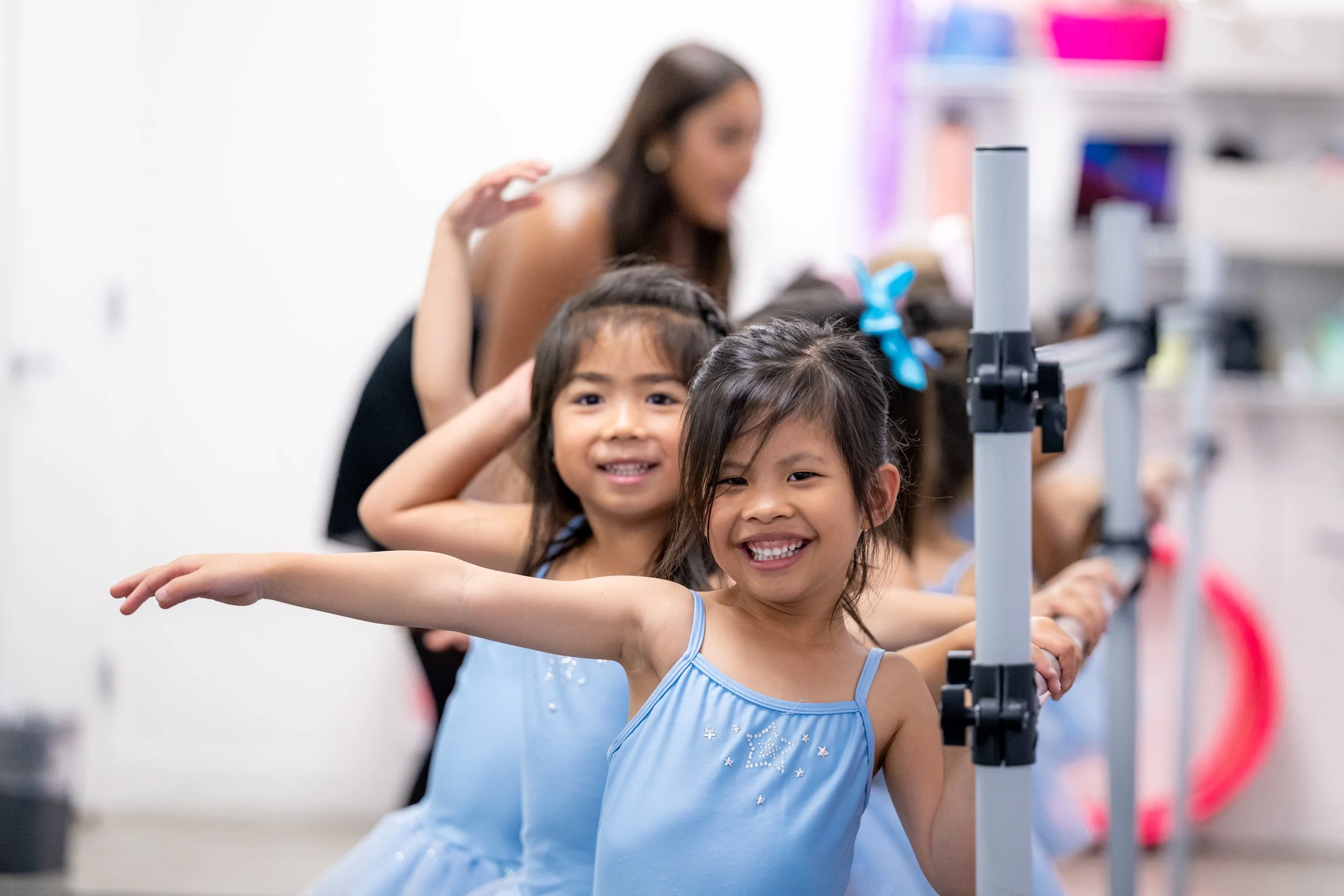
What creative movement means in a preschool dance class
Done correctly, creative movement is not random activity time. It is structured teaching that meets children where they are and helps them progress through movement they can understand, enjoy, and repeat.
Imagination gives direction
Preschoolers learn through images, stories, pretend play, and sensory cues. A child may not respond to abstract correction, but they will understand reaching like a rainbow, walking quietly like a cat, or jumping over puddles with control.
Structure creates safety
Young dancers need clear routines, simple transitions, and repetition. The creative movement approach uses consistent class patterns so students feel secure enough to participate, take risks, and stay engaged from start to finish.
Play builds real skill
Balance, locomotor patterns, rhythm, body awareness, and directional concepts all grow through guided movement play. That is why this page works hand in hand with Class Structure & Outcomes and the broader Preschool Dance Curriculum system.
Why this approach works for ages 2 to 5
Children in preschool classes are still building attention, self-regulation, body awareness, and language. They are not just learning dance steps. They are learning how to be in a class, how to follow rhythm, how to take turns, how to move through space, and how to recover when something feels unfamiliar. A strong creative movement framework respects that reality.
That is also why the Ages 2 to 5 Program Overview matters so much. Different age bands need different prompts, expectations, pacing, and movement challenges. What works for a newly enrolled two year old is not the same as what works for a confident five year old preparing for more sequenced movement.
- Ages 2 to 3: imitation, rhythm exposure, basic classroom routine, safe exploration
- Ages 3 to 4: directional awareness, locomotor variety, pattern following, increased participation
- Ages 4 to 5: clearer sequencing, stronger balance, expressive quality, performance confidence
The building blocks inside a creative movement lesson
Preschool dance becomes easier to teach and easier to scale when the lesson has repeatable ingredients. These blocks can rotate week to week while still giving children the consistency they need.
Movement concepts children can feel
Creative movement helps students experience movement before they have to label everything perfectly. Instead of overloading them with technical language, the teacher guides them into movement qualities and body concepts that become the base for future training.
- Fast and slow
- High and low
- Big and small
- Near and far
- Stillness and motion
- Weight, balance, and direction
Teaching tools that keep preschoolers engaged
Teachers do not need a hundred disconnected activities. They need a small set of reliable tools that make the room feel energetic without becoming chaotic. When those tools live inside a defined curriculum, classes stay consistent from teacher to teacher and from season to season.
- Story prompts and pretend play
- Rhythm games and call-and-response patterns
- Traveling pathways across the floor
- Props, markers, or visual targets when needed
- Simple repetition with just enough novelty
How creative movement supports social and emotional growth
A great preschool dance class is never only about steps. It is also a place where children practice waiting, responding, noticing others, trying again, and expressing themselves in a supported environment. That matters to parents, and it matters to studio owners who want programs that retain families over time.
When children move with intention, copy patterns, freeze on cue, interact with a partner, or share space in a circle, they are practicing more than performance. They are building confidence and regulation through movement. This is one reason the creative movement model supports both child development and stronger studio outcomes, which is why it connects naturally to Enrollment & Retention and Preschool Programs & Profitability.
The best preschool classes feel light and joyful on the surface, but underneath they are doing heavy lifting for coordination, attention, emotional regulation, and parent trust.

From creative movement to measurable outcomes
Families may first enroll because the class looks fun, but they stay when they can see growth. Owners benefit when that growth is consistent enough to explain, repeat, and scale.
| Area of growth | What happens in class | What parents notice |
|---|---|---|
| Coordination | Students practice traveling, balance, stopping, changing direction, and moving to music. | Children look more controlled, more stable, and more confident in their bodies. |
| Listening skills | Teachers use cue-based movement, simple sequences, and transition rituals. | Children respond faster, follow directions better, and know what to expect. |
| Confidence | Students experience success through achievable prompts and repeated wins. | Parents see more participation, less hesitation, and stronger class comfort. |
| Expressiveness | Imaginative movement invites children to explore quality, shape, and emotion. | Children perform with more personality and are more willing to engage onstage. |
| Classroom readiness | Creative movement uses routines, turn taking, and shared spatial awareness. | Families see improvements that transfer beyond dance class. |
For the repeatable class flow behind these outcomes, visit Class Structure & Outcomes. For the age-band progression, continue to Program Overview.
Why this matters for studio owners
Creative movement is not just a teaching preference. It is an operations decision. When preschool classes are built on a reliable approach, teachers prep less, parents understand the value faster, and the program becomes easier to grow.
Consistency across teachers
Studios get in trouble when preschool success depends on one standout instructor. A defined creative movement system helps new teachers step into classes with confidence and helps owners maintain quality across multiple rooms or locations. That kind of consistency supports the broader Grow Your Dance Studio pillar because it protects the customer experience while the business expands.
Clearer parent messaging
Parents do not need a lecture on pedagogy. They need to understand what their child is gaining. When a studio can explain that movement games are building rhythm, balance, confidence, and attention, the class feels purposeful instead of random. That makes enrollment conversations easier and strengthens retention over time.
Better retention patterns
Preschool families stay when classes feel organized, joyful, and age-appropriate. If the room feels too chaotic, too advanced, or too repetitive without purpose, families leave. The creative movement approach helps prevent that drift by keeping the preschool experience aligned with child development and visible outcomes.
A stronger bridge into future training
Creative movement is not the end point. It is the bridge into more structured technique. Children who learn musicality, balance, spatial awareness, and self-regulation early are more prepared for the next stages of training. That is part of what makes a curriculum-based model stronger than pieced-together custom classes, which is why this page should also feed Curriculum vs Custom Classes.
Developmentally appropriate teaching matters
What to avoid
A weak preschool class often asks children to perform beyond their developmental stage. That can look polished for a moment, but it usually creates frustration, behavior issues, or shallow learning. The better approach is to layer skills in a way children can absorb.
- Too much standing and waiting
- Verbal instructions that are too long
- Technique demands without a playful entry point
- Transitions that feel abrupt or confusing
What strong preschool teaching looks like
Developmentally appropriate practice is a real standard, not a soft idea. The National Association for the Education of Young Children outlines why early childhood teaching should match how young children grow and learn. That aligns directly with a structured creative movement model, where guided exploration is used to build skill instead of replacing it. For external reference, see NAEYC's guidance on developmentally appropriate practice.
Creative Movement Approach FAQs
+ What is creative movement in preschool dance?
+ Is creative movement just free play?
+ Why is creative movement important for ages 2 to 5?
+ How does creative movement help studio retention?
+ Does creative movement replace dance technique?
+ Where should I go next after this page?
Continue through the curriculum and growth pages
Preschool Dance Curriculum
The main curriculum pillar covering structure, progression, methodology, and business value.
Ages 2 to 5 Program Overview
See how Twinkle Star adjusts movement, pacing, and expectations across preschool age bands.
Class Structure & Outcomes
Review the repeatable lesson flow that turns joyful movement into visible progress.
Research-Backed Methodology
Explore the evidence and teaching philosophy behind the curriculum framework.
Grow Your Dance Studio
Connect preschool curriculum decisions to retention, profitability, and studio growth.
Studio Owner Resources
Support the operational side with tools, training, and next-step resources for owners.